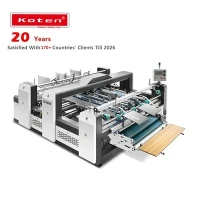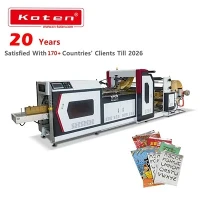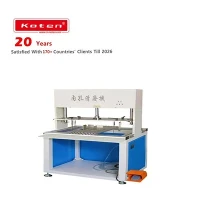

Automatic perfect binding machines are primarily categorized based on their structural design, level of automation, and application scenarios; each type offers distinct characteristics regarding production capacity, operational methods, and scope of application.
Manual and semi-automatic perfect binding machines. These units require manual intervention for certain tasks-such as positioning the book block or aligning the cover-while the machine itself handles the heating, gluing, and clamping processes. Featuring a relatively simple structure and lower costs, they are ideal for small print shops or low-volume usage.
Fully automatic perfect binding machines. These machines automate the entire workflow-including book block alignment, spine milling, gluing, cover attachment, and clamping-with minimal human intervention. Highly efficient and stable, they are well-suited for medium-to-large printing facilities and high-volume production requirements.
Digital short-run perfect binding machines. Designed specifically for small-batch, high-variety binding needs, these machines feature rapid startup, flexible job changes, and ease of operation. They are ideally suited for print-on-demand, rapid prototyping, and personalized publishing applications.
High-speed industrial perfect binding machines are also available, designed primarily for large-scale, continuous production environments. Characterized by high automation and rapid operating speeds, these machines feature advanced control systems and inspection capabilities, enabling them to meet the publishing industry's dual demands for high production capacity and consistent quality.