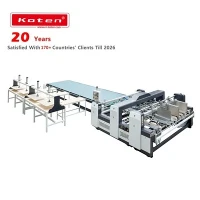

The configuration of thick-paper counting machines is primarily designed around three core objectives: stable paper feeding, counting accuracy, and operational control; while specific models may vary, the overall structural layout remains relatively standardized.
The paper feeding and separation system serves as the equipment's foundational component. It typically incorporates high-friction feed rollers and pneumatic or roller-based separation mechanisms to ensure that thick sheets enter the counting zone steadily-one by one-thereby preventing issues such as sheet overlapping or paper jams and guaranteeing counting accuracy at the source.
The counting and detection system generally employs photoelectric sensors or high-precision infrared detection devices to count sheets by sensing their passage in real-time. Some high-end models also feature intelligent recognition or anti-overlap detection capabilities to enhance stability when handling complex materials.
The control system and operation panel usually feature a PLC control module and a Human-Machine Interface (HMI). Operators can directly configure parameters such as count quantity, speed, and batch management, allowing for flexible operation while facilitating the management and tracking of production data.
Additional components include the paper output and stacking system, as well as the machine frame and drive mechanism. The output section ensures the orderly discharge of counted sheets, facilitating smooth downstream packaging or processing; the frame and drive mechanism provide structural support, ensuring stability and minimal vibration even during high-speed operation.